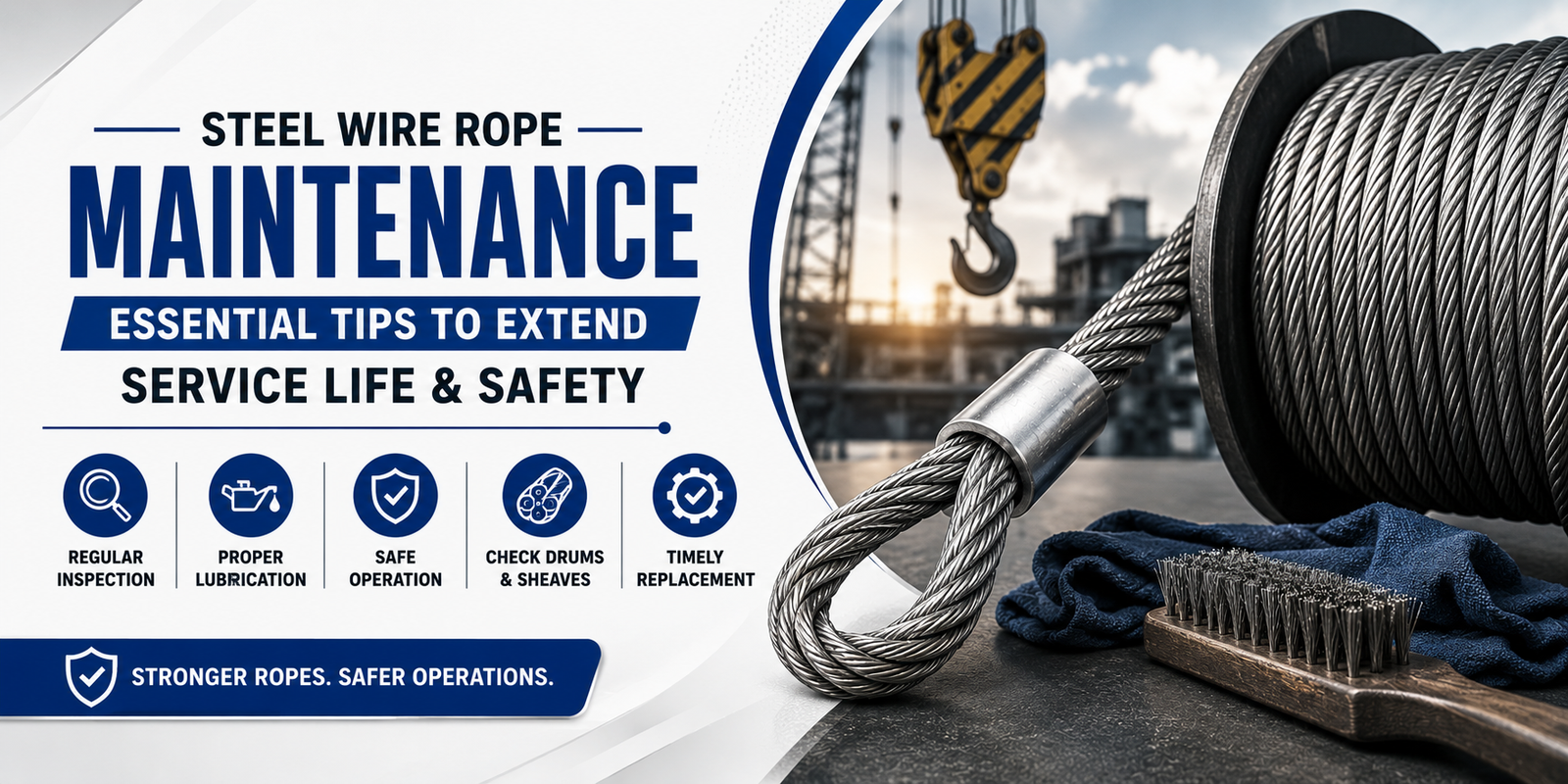
Steel wire ropes are widely used in cranes, hoists, elevators, construction machinery, mining equipment, and material-handling systems. Because these ropes often carry heavy loads, proper maintenance is essential for safe and reliable operation. Regular inspection and correct handling can help identify problems early, reduce unexpected downtime, and extend the working life of the rope.
Why Steel Wire Rope Maintenance Matters
Even a high-quality steel wire rope can gradually deteriorate because of repeated bending, heavy loading, abrasion, corrosion, and improper handling. Small signs of damage can develop into serious failures if they are ignored.
A proper maintenance program helps businesses:
Improve workplace safety
Reduce equipment downtime
Extend rope service life
Identify damage at an early stage
Maintain consistent lifting performance
Reduce unnecessary replacement costs
1. Inspect the Rope Regularly
Regular visual inspection should be an important part of every lifting operation. Examine the entire accessible length of the rope and look for broken wires, corrosion, kinks, crushing, birdcaging, deformation, or unusual wear.
Pay particular attention to areas that pass repeatedly over sheaves, drums, and other components because these sections may experience greater wear.
2. Check for Broken Wires
Broken wires are one of the most common signs that a wire rope may be approaching the end of its useful service life. A few broken wires may indicate localized damage, while concentrated breaks can suggest significant deterioration.
The rope should be evaluated according to the applicable manufacturer’s recommendations and relevant safety standards before continued use.
3. Keep the Rope Properly Lubricated
Lubrication helps reduce friction between individual wires and strands while providing protection against moisture and corrosion. However, using the correct lubricant and applying it properly is important.
Before lubrication, remove excessive dirt or contaminants where appropriate. The lubricant should penetrate into the rope rather than simply forming a thick coating on the outside.
4. Avoid Overloading
Using a steel wire rope beyond its rated capacity can cause excessive stress and accelerate damage. Always operate lifting equipment within its specified working load limits.
Sudden shock loading should also be avoided whenever possible because it can place significantly higher forces on the rope than normal lifting operations.
5. Inspect Drums and Sheaves
Wire rope performance depends not only on the rope itself but also on the condition of the equipment it operates with. Damaged or incorrectly sized sheaves and drums can increase bending stress and accelerate wear.
Check these components regularly for excessive wear, damage, alignment problems, and other conditions that could negatively affect the rope.
6. Store Wire Rope Correctly
Proper storage can prevent unnecessary corrosion and deformation. Steel wire ropes should generally be stored in a clean, dry location away from moisture, chemicals, and other corrosive materials.
Avoid dropping or dragging rope across rough surfaces, as this can damage the wires before the rope is even put into service.
When Should a Wire Rope Be Replaced?
There is no single replacement schedule that applies to every steel wire rope. Replacement decisions should be based on the rope’s actual condition, operating environment, inspection results, and applicable discard criteria.
Signs such as severe corrosion, excessive broken wires, significant deformation, crushing, kinking, or other structural damage should receive immediate attention.
Conclusion
Proper steel wire rope maintenance is essential for achieving reliable performance and safe lifting operations. Regular inspection, correct lubrication, proper storage, avoiding overloads, and maintaining drums and sheaves can all contribute to longer rope life.
By following a planned maintenance and inspection routine, industries can minimize unexpected failures, improve operational efficiency, and ensure their steel wire ropes remain dependable for demanding applications.