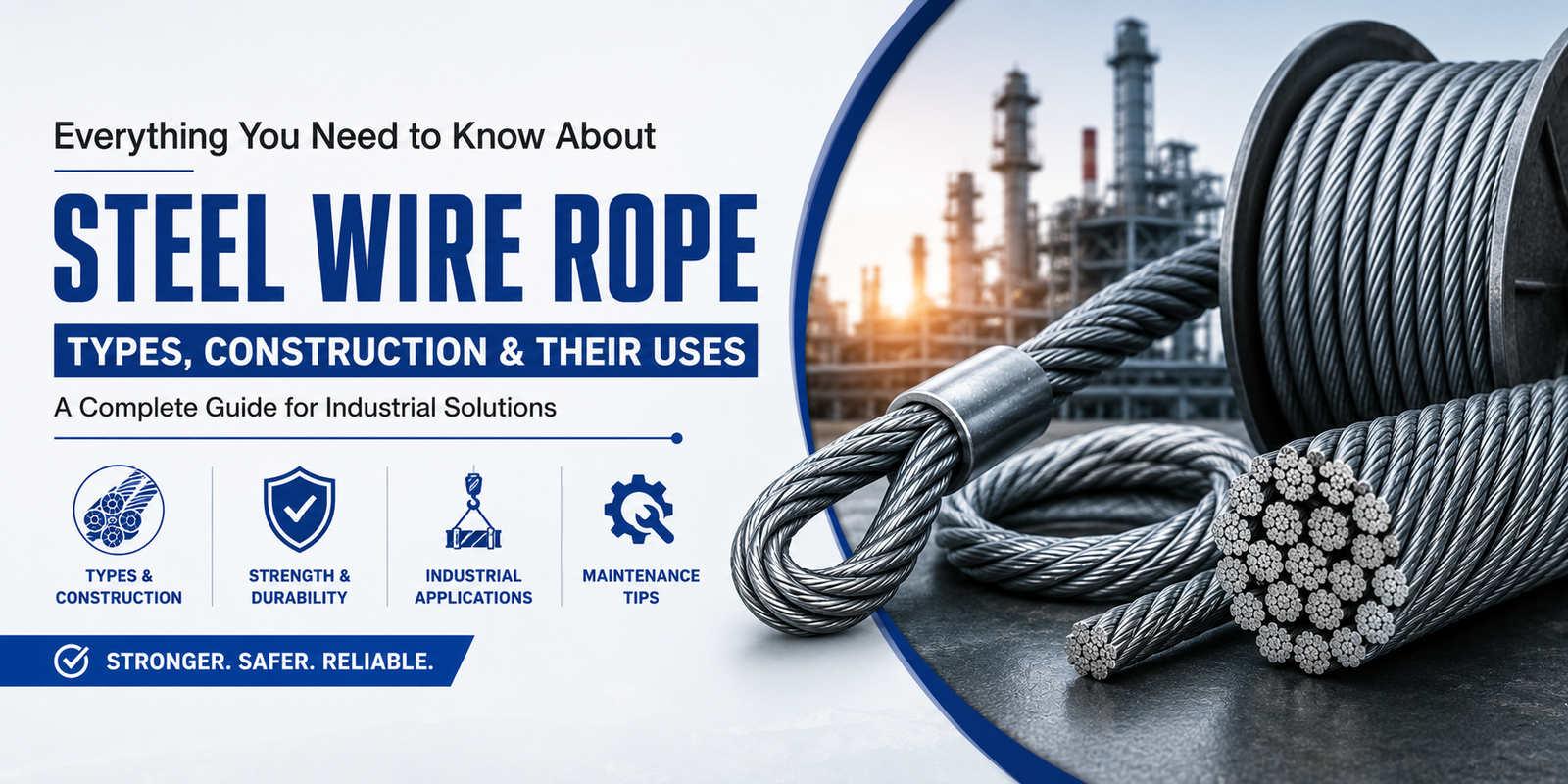
Steel wire ropes are essential components in many industries where heavy loads need to be lifted, moved, supported, or secured. From cranes and construction equipment to elevators, mining machinery, and marine applications, the right wire rope can significantly improve safety, performance, and service life.
However, choosing a suitable steel wire rope is not simply about selecting the strongest option. Factors such as construction, diameter, flexibility, working conditions, and load requirements must be considered carefully.
1. Understand the Application
The first step is to identify exactly how the steel wire rope will be used. Different applications place different demands on the rope.
For example, crane operations may require a rope that offers excellent flexibility and resistance to repeated bending, while mining applications may require high strength and durability under demanding conditions.
Common applications include:
Overhead and tower cranes
Construction and lifting equipment
Elevators and hoists
Mining machinery
Oil and gas equipment
Marine and offshore operations
Material handling systems
Understanding the working environment helps determine the most appropriate rope construction.
2. Consider the Required Strength
The rope must have sufficient breaking strength to safely handle the intended load. Selecting a rope with inadequate strength can create serious safety risks, while choosing an unnecessarily oversized rope may increase cost and reduce flexibility.
Always consider the Working Load Limit (WLL) and appropriate safety factor for the application. The rope should be selected according to the manufacturer’s specifications and applicable industry standards.
3. Select the Correct Rope Construction
Steel wire ropes are available in different constructions, including various strand arrangements and core types. Each construction provides different characteristics.
Some ropes are designed for greater flexibility, while others prioritize crushing resistance, strength, or resistance to abrasion.
The most suitable construction depends on factors such as:
Frequency of operation
Bending cycles
Load conditions
Drum and sheave configuration
Required flexibility
Exposure to abrasion
4. Choose the Appropriate Diameter
Rope diameter is another important consideration. The diameter should match the equipment’s drum, sheaves, sockets, and other components.
Using the wrong diameter can lead to excessive wear, poor performance, and premature rope failure. It is important to follow the equipment manufacturer’s recommendations when selecting the diameter.
5. Consider the Working Environment
Environmental conditions can have a major effect on steel wire rope performance. Outdoor, marine, mining, and industrial environments may expose ropes to moisture, chemicals, dirt, heat, or corrosive substances.
For applications where corrosion is a concern, galvanized steel wire ropes can provide additional protection. Proper lubrication and regular inspection are also important for extending service life.
6. Don’t Ignore Maintenance
Even a high-quality steel wire rope requires proper maintenance. Regular inspection can help identify broken wires, corrosion, deformation, kinking, crushing, or other signs of deterioration before they become major problems.
A good maintenance routine should include:
Regular visual inspections
Proper lubrication
Checking for broken or damaged wires
Inspecting sheaves and drums
Monitoring rope wear
Replacing ropes when they reach the recommended discard criteria
Conclusion
Choosing the right steel wire rope requires more than simply comparing strength or price. The application, load, construction, diameter, operating conditions, and maintenance requirements should all be evaluated before making a decision.
By selecting the appropriate rope for each industrial application and following proper inspection and maintenance practices, businesses can improve equipment reliability, reduce downtime, and maintain safer lifting operations. The right steel wire rope is an investment in performance, durability, and workplace safety.