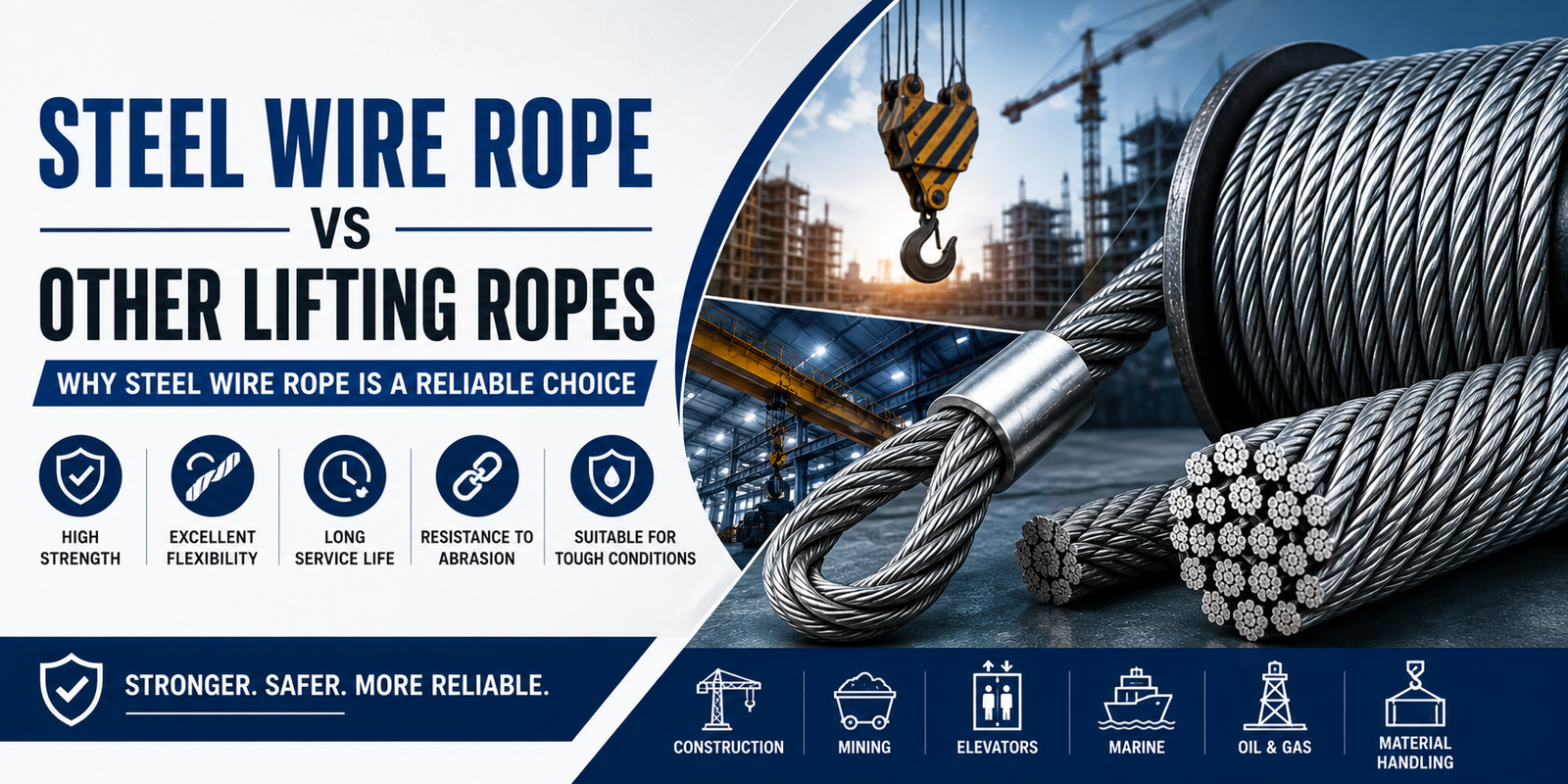
Steel wire rope is one of the most widely used lifting and load-supporting solutions across heavy industries. Its combination of strength, flexibility, durability, and resistance to demanding working conditions makes it suitable for cranes, elevators, construction machinery, mining equipment, marine operations, and material-handling systems.
When selecting a lifting rope, understanding the advantages of steel wire rope can help industries choose a solution that matches their operational requirements.
What Makes Steel Wire Rope Different?
Steel wire rope is manufactured by twisting multiple steel wires together to form strands, which are then laid around a central core. This construction gives the rope excellent tensile strength while allowing it to bend around sheaves and drums during operation.
Depending on the application, different constructions, cores, diameters, and finishes can be selected.
Key Advantages of Steel Wire Rope
1. High Strength
One of the biggest advantages of steel wire rope is its ability to handle heavy loads. Properly selected wire ropes can provide excellent breaking strength and dependable performance in demanding lifting applications.
2. Excellent Flexibility
Although steel is a strong material, wire rope is designed to remain flexible. This allows it to move over pulleys, drums, and sheaves without losing its functional performance.
3. Long Service Life
When correctly selected, installed, lubricated, and maintained, steel wire rope can provide a long working life. Regular inspection is important for identifying wear before it affects operational safety.
4. Resistance to Abrasion
Industrial operations can expose ropes to friction and repeated movement. Steel wire rope offers good resistance to mechanical wear, making it suitable for demanding environments.
Where Is Steel Wire Rope Used?
Steel wire ropes are used in a wide variety of industries and equipment.
Common applications include:
Cranes: Used for lifting and moving heavy materials.
Construction: Suitable for hoists, tower cranes, and lifting systems.
Mining: Used in demanding material transportation and lifting operations.
Elevators: Designed to support repeated movement and bending.
Marine Industry: Used for mooring, lifting, and offshore equipment.
Oil & Gas: Suitable for various lifting and mechanical applications.
Material Handling: Used in hoists and industrial machinery.
Choosing the Right Steel Wire Rope
Not every steel wire rope is suitable for every application. Before selecting a rope, consider several important factors.
Important Selection Factors
Load Capacity: Determine the maximum load the rope needs to handle.
Rope Diameter: Ensure the diameter is compatible with the equipment, drum, and sheaves.
Construction: Choose a construction based on flexibility, strength, abrasion resistance, and operating conditions.
Core Type: Different core designs can provide different levels of strength, flexibility, and resistance to crushing.
Environment: Consider exposure to moisture, chemicals, heat, dust, and corrosive conditions.
Frequency of Use: Applications involving frequent bending may require a rope designed specifically for repeated bending cycles.
Importance of Proper Maintenance
Even the best steel wire rope requires regular care. Routine inspection should check for broken wires, corrosion, kinks, crushing, deformation, and excessive wear. Proper lubrication can reduce internal friction and help protect the rope from corrosion.
Equipment such as drums and sheaves should also be inspected because their condition can directly affect rope performance.
Conclusion
Steel wire rope remains a dependable choice for industries that require strength, durability, flexibility, and reliable lifting performance. By selecting the correct rope construction and diameter and following proper installation and maintenance practices, businesses can improve equipment efficiency and support safer industrial operations.
The right steel wire rope is not just a lifting component—it is an important part of a reliable and safe industrial system.